WNBA inclusion debate intensifies with player and activist comments

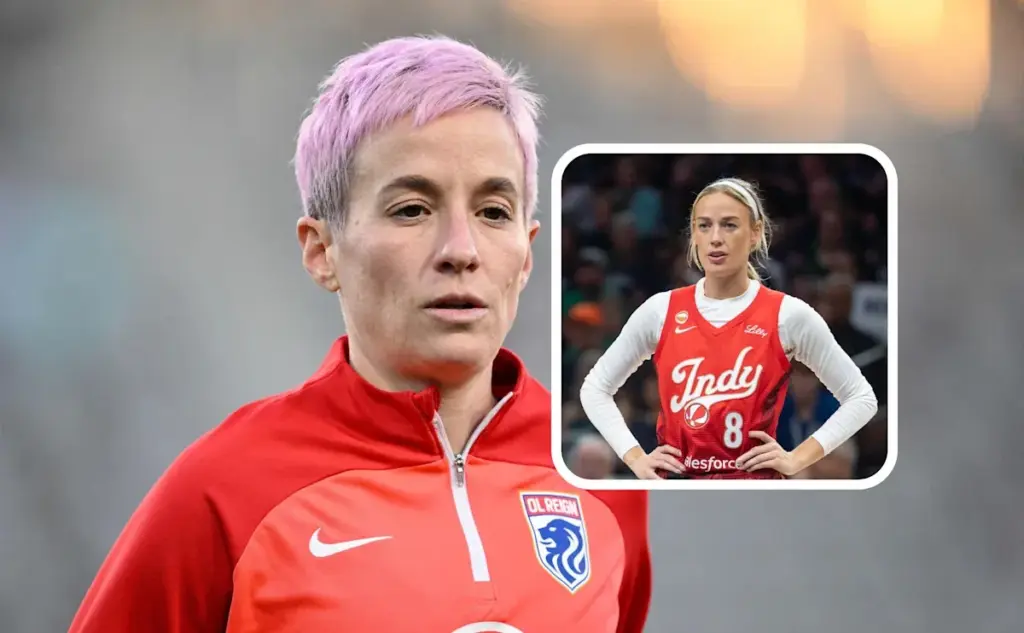
The discussion surrounding the inclusion of transgender athletes in women’s sports has gained further attention following comments from Indiana Fever guard Sophie Cunningham and activist Payton McNabb, alongside criticism from former United States Women’s National Team player Megan Rapinoe.
Sophie Cunningham initiated a broader conversation after expressing her views on the topic in an interview, stating her desire to “protect young girls in a locker room, or young girls in sport who shouldn’t have to go against biological men.” She later reiterated her stance, describing her remarks as “common sense” and emphasizing the importance of protecting children, particularly young girls, in sports.
Following these comments, Cunningham posted on social media and was photographed with activist Riley Gaines, who attended a recent game involving the Minnesota Lynx. Cunningham‘s remarks have drawn both support and criticism.
Athlete and Activist Perspectives
Payton McNabb, an advocate for women’s sports and Title IX, has praised Cunningham‘s willingness to speak out. McNabb, who sustained a brain injury during a high school volleyball match, has testified before lawmakers in Washington regarding the protection of women’s sports. She views Cunningham‘s actions as courageous, especially given the potential backlash.
McNabb also commented on the stance of Minnesota Lynx head coach Cheryl Reeve, who has publicly supported transgender participation in sports. Reeve wore a shirt advocating for transgender youth during a game against the Fever. McNabb expressed difficulty understanding why some women would appear to oppose other women and girls in this context, suggesting a double standard when advocating for female athletes while also supporting the inclusion of biological males in women’s categories.
McNabb believes that the league’s current approach might change if a biological male were to compete in the WNBA, referencing a French player, Julie Tétart, who has shown interest in the league. She clarified that her aim is not to see the WNBA negatively impacted, but to ensure protections and opportunities for female athletes.
Regarding Caitlin Clark, McNabb acknowledged her focus on basketball but believes that due to her significant influence, Clark is inherently part of the Title IX discussion. McNabb suggested that a public stance from Clark would carry considerable weight for the next generation of female athletes.
Criticism from Megan Rapinoe
Megan Rapinoe, a prominent figure in women’s soccer, has voiced her criticism of Cunningham‘s comments and actions. Speaking on her podcast, Rapinoe stated that while she does not know Cunningham personally, the photo with Riley Gaines provided insight into Cunningham‘s beliefs. Rapinoe highlighted Gaines‘s association with organizations that aim to exclude transgender individuals and have reportedly sought to repeal Title IX.
Rapinoe questioned the consistency of Cunningham‘s claims to support both transgender people and Title IX, emphasizing the importance of accountability for those with significant public platforms. She argued that the narrative against transgender athletes often misrepresents the issue, framing it as adult men competing against young girls, which she stated is not the reality in elite sports.
Rapinoe contended that current laws often prevent children from participating in youth sports, while effective policies for transgender athletes have existed in elite sports for years without widespread attention. She urged a critical examination of the arguments used to exclude transgender athletes.
McNabb, reflecting on her own experience, noted that it took approximately three years for her health to show significant progress after her injury.
Source: foxnews.com

